
instructions for map guide lwmfmaps
LWMFMaps is a versatile platform offering comprehensive mapping solutions, from basic navigation to advanced data analysis, empowering users with powerful tools.
This guide unlocks the full potential of LWMFMaps, covering key features, troubleshooting, and advanced techniques for optimal map creation and utilization.
LWMFMaps provides a compelling solution for diverse applications, enhancing mapping workflows and offering accessibility across various devices, including mobile platforms.
What is LWMFMaps?
LWMFMaps is presented as a comprehensive guide and powerful platform designed for both novice and experienced map users. It’s more than just a digital map; it’s a versatile tool for map creation, analysis, and effective navigation. The platform aims to simplify complex mapping tasks, offering a user-friendly interface and a robust set of features.
Essentially, LWMFMaps serves as a digital resource mirroring principles found in established land navigation guides, like the US Army Field Manual FM 3-25.26. This connection highlights its focus on practical map reading skills and route planning. It’s designed to be accessible on various devices – desktops, laptops, and mobile devices – ensuring usability wherever you are.
The core functionality revolves around providing travelers with tools like a search function, routing capabilities, and the ability to highlight nearby attractions and landmarks. Ultimately, LWMFMaps strives to improve mapping workflows and empower users with a compelling solution for a wide range of applications.
Key Features of LWMFMaps
LWMFMaps boasts several key features designed to enhance the user experience and provide a comprehensive mapping solution. A prominent feature is its robust search functionality, allowing users to quickly locate specific areas or points of interest. The integrated routing tool facilitates efficient route planning, while the ability to highlight nearby attractions and landmarks enriches travel experiences.
Furthermore, LWMFMaps offers a route comparison feature, enabling users to evaluate different travel options. Its accessibility across multiple devices – desktops, laptops, and mobile platforms – adds to its versatility. The platform’s strength lies in its ability to integrate land navigation principles, drawing relevance from resources like US Army Field Manual FM 3-25.26.
These features collectively position LWMFMaps as a valuable resource for travelers and anyone requiring a powerful and adaptable mapping tool.

Getting Started with LWMFMaps
LWMFMaps installation and configuration are straightforward, enabling quick access to its powerful features. Begin with basic navigation to familiarize yourself with the interface and tools.
Installation and Configuration
LWMFMaps boasts a streamlined installation process, ensuring a swift setup for all users. Begin by downloading the application from the official website, carefully following the provided instructions for your specific operating system.
Once downloaded, launch the installer and proceed through the guided configuration. Pay close attention to directory selections, ensuring sufficient storage space is allocated. Verify that all necessary dependencies are installed, as outlined in the documentation.
Post-installation, a configuration wizard will assist in setting up initial preferences, such as default map views and data layer settings. Double-check your internet connection during this phase, as LWMFMaps requires online access for optimal functionality. Refer to the official documentation for detailed troubleshooting steps if any issues arise during installation or configuration.
Basic Navigation
LWMFMaps offers intuitive navigation controls for seamless map exploration. Utilize the mouse or touchscreen to pan across the map, effortlessly shifting your viewpoint. Zoom in and out using the scroll wheel, on-screen buttons, or pinch-to-zoom gestures for detailed inspection or broader overviews.
The application features a search bar enabling quick location finding by address, coordinates, or points of interest. Explore the toolbar for essential functions like centering the map on your current location and resetting the view to its default settings.
Familiarize yourself with the map’s scale indicator, providing a visual representation of distance. Practice these basic maneuvers to confidently navigate and explore the vast capabilities of LWMFMaps.
Understanding the Interface
LWMFMaps boasts a user-friendly interface designed for efficient map interaction. The main map area displays geographical data, while the toolbar provides quick access to essential functions like zooming, panning, and searching. Layers panel controls the visibility of different data sets, such as roads, landmarks, and custom markers.
The side panel often houses search results, location information, and options for route planning. Pay attention to the scale indicator, displaying the map’s current zoom level and corresponding distance representation.
Explore the settings menu to customize map appearance and behavior. Mastering these interface elements unlocks the full potential of LWMFMaps.

Troubleshooting Common Issues
LWMFMaps offers solutions for common problems like map loading failures, missing markers, and data import errors, ensuring a smooth user experience.
Addressing these issues often involves checking internet connectivity, verifying installation, and clearing browser cache for optimal performance.
Map Not Loading
If the map fails to load within LWMFMaps, the initial step involves a thorough verification of your internet connection, ensuring a stable and active link is present.
Subsequently, confirm that LWMFMaps is correctly installed and properly configured on your system, checking for any installation errors or misconfigurations.

A frequently overlooked solution is to clear your browser’s cache and cookies, as accumulated temporary files can sometimes interfere with the map’s rendering process.
For persistent issues, consult the official LWMFMaps documentation’s troubleshooting section, which provides detailed guidance and specific solutions for map loading problems.
Ensure your browser is up to date, as older versions may lack compatibility with the latest LWMFMaps features.
Markers Not Appearing
If markers are not visible on your LWMFMaps display, the first action is to verify that the marker layer itself is enabled within the application’s interface.
Confirm you have correctly added the markers to the map and that they have been saved appropriately, checking for any input errors during the marker creation process.
Browser cache can often interfere with the proper display of map elements; therefore, clearing your browser’s cache and cookies is a recommended troubleshooting step.
Double-check the marker’s coordinates to ensure they fall within the currently visible map area and aren’t located far outside the viewport.
Refer to the LWMFMaps documentation for specific instructions on marker visibility settings and potential troubleshooting steps.
Data Layer Import Problems
Encountering issues when importing data layers into LWMFMaps? The most frequent cause is incompatibility between your data file’s format and the formats supported by the application.
Ensure your data is saved in a compatible format, such as GeoJSON, Shapefile, or KML, as specified in the LWMFMaps documentation. Verify file extensions are correct.
Thoroughly inspect your data for any errors or inconsistencies, including incorrect coordinate systems, missing values, or invalid geometries, which can halt the import process.
Confirm that the data layer adheres to the expected schema and structure required by LWMFMaps, referencing the official documentation for detailed specifications.
Consult the troubleshooting section of the LWMFMaps guide for specific error messages and solutions.
Advanced Techniques in LWMFMaps
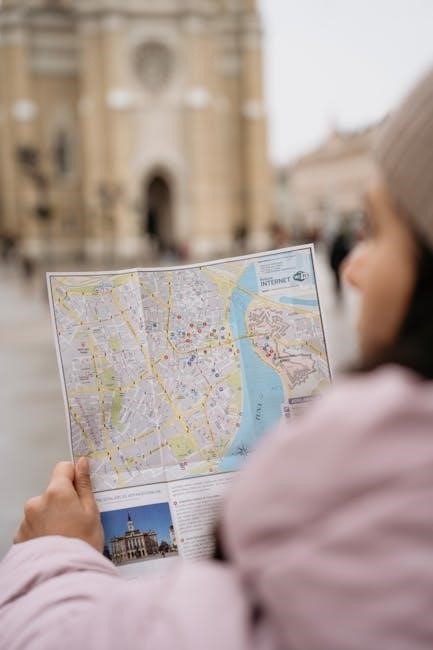
Mastering LWMFMaps involves customizing map appearances, skillfully working with data layers, and optimizing routes for efficient planning and analysis.
Unlock powerful data manipulation capabilities and elevate your mapping workflow with these advanced features within the LWMFMaps platform.
Customizing Map Appearance
LWMFMaps empowers users to personalize their map experience through extensive customization options. Altering the visual presentation enhances clarity and focuses attention on critical data. Users can modify base map styles, choosing from various themes to suit their preferences and the map’s purpose.
Furthermore, LWMFMaps allows for adjustments to marker styles – color, size, and icon – enabling effective differentiation of points of interest. Control over label visibility and formatting ensures essential information is clearly displayed without cluttering the map.
Advanced users can even implement custom CSS for granular control over every visual element, creating a truly unique and tailored mapping solution. These customization features contribute to a more intuitive and informative map viewing experience.
Working with Data Layers
LWMFMaps facilitates powerful data visualization through its robust data layer functionality. Users can import various data formats to overlay information onto the map, enriching its analytical capabilities. Supported formats include common geospatial files, enabling seamless integration of existing datasets.
Importing data layers requires ensuring compatibility and data consistency to avoid errors. LWMFMaps allows for styling of data layers – color schemes, transparency, and symbology – to effectively communicate patterns and trends.
Users can manage layer visibility and order, controlling which information is displayed and its prominence. This feature is crucial for creating focused maps that highlight specific data aspects, enhancing the overall analytical process.
Route Planning and Optimization
LWMFMaps offers a sophisticated route planning tool, enabling users to define start and end points and generate optimal routes based on various criteria. The platform considers factors like distance, travel time, and terrain, providing efficient navigation solutions.
Users can customize route preferences, specifying preferred road types or avoiding certain areas. LWMFMaps supports the addition of waypoints along the route, allowing for detailed itinerary planning and exploration of points of interest.
Route optimization features help identify the most efficient path, minimizing travel time and distance. This functionality is invaluable for travel planning, logistics, and field operations, enhancing productivity and resource management.

LWMFMaps and Land Navigation Principles
LWMFMaps integrates seamlessly with land navigation principles, mirroring techniques outlined in US Army Field Manual FM 3-25.26 for effective map reading.
Understanding map fundamentals and compass integration enhances LWMFMaps utilization, bridging traditional skills with modern digital mapping capabilities.
Relevance of US Army Field Manual FM 3-25.26
US Army Field Manual FM 3-25.26 serves as a foundational resource for understanding core land navigation principles directly applicable to LWMFMaps. This manual comprehensively details essential aspects of map reading, encompassing terrain association, map scale interpretation, and utilizing topographic features for orientation.
Its relevance extends to compass proficiency, route planning methodologies, and navigating using grid coordinates – skills that significantly enhance a user’s ability to effectively interpret and utilize LWMFMaps’ functionalities. The manual’s civilian reference edition makes these crucial techniques accessible to a broader audience, fostering a deeper understanding of spatial awareness and navigational competence.
By grounding LWMFMaps usage in these established principles, users can maximize the platform’s potential and confidently apply their knowledge in real-world scenarios.
Map Reading Fundamentals
Map reading, a cornerstone of land navigation, involves interpreting symbols, understanding map scales, and recognizing terrain features – skills vital for effective LWMFMaps utilization. Mastering these fundamentals allows users to accurately determine distance, direction, and location on a map.
Key elements include identifying contour lines to visualize elevation changes, deciphering map legends for symbol meanings, and utilizing grid systems for precise coordinate location. Understanding map orientation, aligning the map with the real world, is also crucial for accurate navigation.
These skills, detailed in resources like FM 3-25.26, translate directly to LWMFMaps, enabling users to confidently plan routes, interpret data layers, and navigate effectively within the digital environment.
Compass Integration
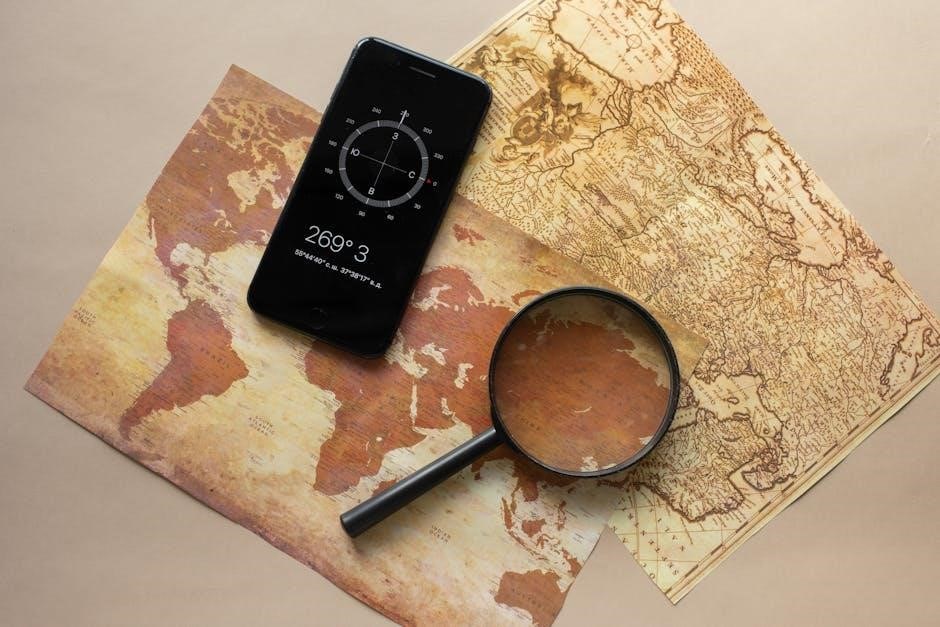
Compass integration with LWMFMaps enhances navigational accuracy, bridging the gap between digital mapping and traditional land navigation techniques. While LWMFMaps offers digital direction finding, a physical compass provides a reliable backup and reinforces fundamental skills.
Understanding declination – the angle between true north and magnetic north – is crucial for accurate compass readings. LWMFMaps can assist in determining local declination, allowing for precise map orientation and bearing calculations. Combining digital maps with a compass allows for cross-referencing and verification of direction.
Referencing FM 3-25.26 provides detailed instruction on compass usage, complementing LWMFMaps’ features and ensuring users are proficient in both digital and analog navigation methods.
Utilizing LWMFMaps for Travel Planning
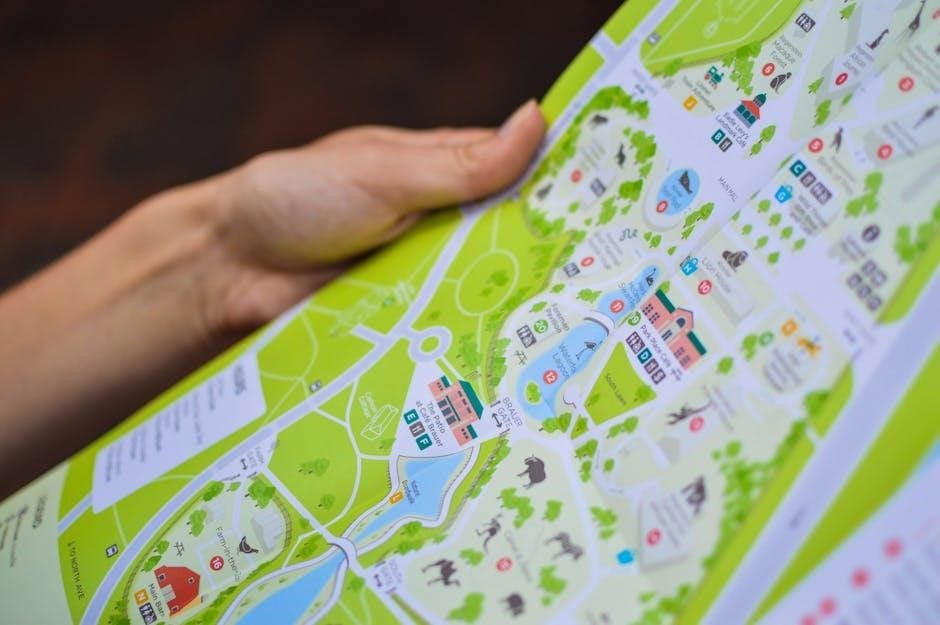
LWMFMaps streamlines travel planning with its robust search, route comparison, and attraction highlighting features, ensuring informed and efficient trip preparation.
Discover nearby landmarks and optimize routes for seamless adventures using this powerful mapping platform.
Search Functionality
LWMFMaps boasts a powerful search functionality, enabling users to quickly locate specific addresses, points of interest, or geographical coordinates with remarkable precision.
Simply enter your desired destination into the search bar, and LWMFMaps will pinpoint its location on the map, providing detailed information and relevant context.
The search tool extends beyond simple addresses; it also supports searches for businesses, landmarks, and even specific categories of establishments, like restaurants or hotels;
Furthermore, LWMFMaps offers intelligent suggestions as you type, accelerating the search process and minimizing potential errors.
This feature is invaluable for travelers seeking to discover nearby attractions or efficiently navigate unfamiliar territories.
Utilize the search bar to unlock the full potential of LWMFMaps and enhance your exploration experience.
Highlighting Nearby Attractions and Landmarks
LWMFMaps excels at identifying and showcasing nearby attractions and landmarks, enriching your travel planning and exploration endeavors. The platform intelligently displays points of interest directly on the map, categorized for easy browsing.
Users can effortlessly discover local restaurants, historical sites, museums, parks, and other notable destinations in their vicinity. Detailed information, including descriptions, hours of operation, and user reviews, is readily available.
LWMFMaps’ highlighting feature allows for quick identification of potential destinations, streamlining the process of creating personalized itineraries.
This functionality is particularly useful for spontaneous adventures and discovering hidden gems within a new location. Explore with confidence, knowing LWMFMaps has you covered.
Route Comparison
LWMFMaps empowers users to compare multiple routes for their journeys, optimizing travel based on various criteria. The platform calculates different paths considering distance, estimated travel time, and potential traffic conditions.
Users can visualize each route on the map, assessing its suitability based on personal preferences and priorities. LWMFMaps provides a clear overview of each route’s characteristics, facilitating informed decision-making.
Compare routes prioritizing the shortest distance, fastest travel time, or avoiding toll roads.
This feature is invaluable for planning efficient and cost-effective trips, ensuring a smooth and enjoyable travel experience. LWMFMaps delivers comprehensive route analysis.

Optimizing Your LWMFMaps Experience
Enhance performance by clearing browser cache and cookies, ensuring data compatibility, and referencing official documentation for troubleshooting and maximizing LWMFMaps functionality.
Clearing Browser Cache and Cookies
Experiencing display issues with LWMFMaps? Often, the culprit is accumulated browser cache and cookies interfering with the application’s proper functioning. Clearing these temporary files can resolve problems like markers not appearing or maps failing to load correctly.
To clear your cache and cookies, navigate to your browser’s settings – typically found under “History” or “Privacy.” Select the option to clear browsing data, ensuring both “Cached images and files” and “Cookies and other site data” are checked.
Remember to close and reopen LWMFMaps after clearing your browser data for the changes to take effect. This simple step frequently resolves common display glitches and ensures a smoother, more reliable mapping experience.
Ensuring Data Compatibility
Successful data layer import into LWMFMaps hinges on file format compatibility and data integrity. Problems often arise from using unsupported formats or encountering inconsistencies within your datasets. Before importing, verify your data adheres to LWMFMaps’ accepted formats, typically including GeoJSON, Shapefile, or CSV.
Thoroughly inspect your data for errors, missing values, or incorrect coordinate systems. Inconsistent data can lead to import failures or inaccurate map displays. Double-check that all data fields are correctly defined and formatted according to LWMFMaps’ requirements.
Refer to the official documentation for a comprehensive list of supported formats and data specifications to guarantee a seamless import process.
Referencing Official Documentation
For comprehensive guidance and detailed troubleshooting, the official LWMFMaps documentation is an invaluable resource. It provides in-depth explanations of all features, functionalities, and potential issues you may encounter while using the platform.
The documentation covers installation procedures, configuration settings, data import specifications, and advanced techniques for customizing map appearance and optimizing performance. It also includes a dedicated troubleshooting section addressing common problems like map loading errors or marker display issues.
Always consult the official documentation as your primary source of information, ensuring you have the most up-to-date and accurate guidance for maximizing your LWMFMaps experience.

LWMFMaps on Different Devices
LWMFMaps offers seamless accessibility across desktops, laptops, and mobile devices, providing a consistent mapping experience regardless of your chosen platform.
Enjoy versatile map creation and analysis on the go, leveraging the platform’s features on various devices for enhanced usability.
Desktop and Laptop Usage
LWMFMaps truly shines on desktop and laptop computers, offering a spacious interface ideal for detailed map creation, complex data layer manipulation, and in-depth analysis.
The larger screen real estate allows for comfortable navigation and precise marker placement, enhancing the overall user experience.
Utilize the full suite of features, including the robust search functionality, route planning tools, and customization options, with ease and efficiency.
Desktop and laptop users benefit from faster processing speeds, enabling seamless handling of large datasets and intricate map designs.
Take advantage of keyboard shortcuts and multi-monitor setups to further optimize your workflow and maximize productivity with LWMFMaps.
Mobile Device Compatibility
LWMFMaps extends its functionality to mobile devices, providing on-the-go access to your maps and navigational tools, ensuring you stay connected wherever you are.
While the interface is optimized for smaller screens, core features like search, route viewing, and basic marker interaction remain fully accessible and responsive.
Leverage the mobile app for real-time location tracking, offline map access, and quick reference during travel or fieldwork.
However, complex data layer editing and advanced customization options are best suited for desktop environments due to screen size limitations.
Ensure optimal performance by clearing browser cache and verifying data compatibility on your mobile device for a seamless LWMFMaps experience.
Future Developments in LWMFMaps
LWMFMaps anticipates updates based on community feedback, aiming to enhance features and expand capabilities for a more intuitive mapping experience.
Expect continued improvements in performance, data integration, and user interface design, solidifying LWMFMaps as a leading mapping platform.
Expected Updates and Features
LWMFMaps is committed to continuous improvement, with several exciting updates planned for the near future. Users can anticipate enhanced data layer support, allowing for seamless integration of diverse geospatial datasets and improved visualization options. A key focus will be refining the route planning tool, incorporating real-time traffic data and offering more customizable route profiles.
Furthermore, the development team is exploring advanced features like 3D map rendering and augmented reality integration for mobile devices. Community feedback is invaluable, and suggestions for new functionalities are actively being considered. Expect improvements to the search functionality, making it even easier to locate points of interest and navigate the map effectively. The goal is to provide a more powerful and user-friendly mapping experience for all.
Community Feedback and Contributions
LWMFMaps thrives on the active participation of its user community. We strongly encourage users to share their experiences, suggestions, and bug reports to help shape the future development of the platform. A dedicated forum and feedback portal are available for submitting ideas and engaging in discussions with the development team and fellow users.
Contributions, such as custom map styles, data layer creations, and detailed tutorials, are highly valued and may be featured within the LWMFMaps ecosystem. We believe that collaborative efforts are essential for building a truly comprehensive and user-centric mapping solution. Your input directly influences the enhancements and new features implemented, ensuring LWMFMaps remains a leading tool for navigation and geospatial analysis.
Leave a Reply
You must be logged in to post a comment.