
sundiata epic of old mali pdf
The Sundiata Epic of Old Mali: A Comprehensive Overview
Numerous scholarly articles and research data, archived with Creative Commons licenses, are readily available online as PDFs.
These resources,
spanning diverse fields like ecology and microbiology,
demonstrate a wealth of accessible information.
Specifically,
studies
from 2016
through 2025
offer
detailed
insights
and
data
sets
for
researchers
and
enthusiasts
alike.
Historical Context of the Mali Empire
The Mali Empire, emerging from the decline of the Ghana Empire in the 13th century, represents a pivotal period in West African history. Its foundations, deeply intertwined with the narratives preserved in the Sundiata Epic, reflect a complex interplay of political, social, and environmental factors. While direct PDF documents detailing the empire’s complete historical context are fragmented across various research archives, a synthesis of available data reveals a fascinating picture.

Early Mali, prior to Sundiata Keita, existed as a collection of smaller kingdoms and chiefdoms, often vying for power and resources. The region’s agricultural productivity, as evidenced by studies on crops like rice and legumes (Jiang et al., 2016), supported a growing population, but also fueled competition. Environmental challenges, including fluctuations in rainfall and the spread of diseases like Streptococcus equi impacting livestock (as seen in Australian horse farm studies, 2024), further shaped the political landscape.
The need for centralized governance and security, coupled with the prophetic narratives surrounding Sundiata’s birth and rise, provided the impetus for empire building. Research into predator control strategies in New Zealand (2022) offers a parallel – the need for coordinated action to address widespread challenges. The Epic, therefore, isn’t merely a heroic tale, but a reflection of the historical pressures and opportunities that birthed one of Africa’s most significant empires, with its data archived under CC BY 4.0 licenses (Brown & Collins, 2023).
Origins and Authorship of the Epic
Determining the precise origins and authorship of the Sundiata Epic remains a complex scholarly endeavor, with no single definitive PDF document providing a conclusive answer. The epic, existing primarily within the oral tradition, was not initially a written text. Instead, it evolved through generations of storytelling by griots – hereditary oral historians and musicians.
While a specific author isn’t identified, the epic’s structure and content suggest a gradual accretion of narratives over time, reflecting the socio-political realities of the Mali Empire and beyond. Studies on plant biogeochemistry (Liu, 2025) demonstrate how environmental factors can influence cultural narratives, potentially shaping the epic’s themes. Similarly, research on fungal biosynthesis (IzquierdoBueno, 2018) highlights the intricate connections between natural processes and cultural understanding.
The available PDF resources, though not directly focused on authorship, reveal a pattern of knowledge preservation and transmission. Like the archiving of net primary production data (Brown & Collins, 2023) under Creative Commons licenses, the Epic represents a form of cultural archiving. The griots, therefore, acted as custodians of this knowledge, adapting and reinterpreting the story for each generation, ensuring its survival and relevance, even as scholarly articles on diverse topics continue to emerge (Salvatore & Adam, 2016; Das & Naskar, 2016).
Oral Tradition and Griots
The Sundiata Epic’s existence is inextricably linked to the vibrant oral tradition of Mandinka society and the crucial role of griots. Unlike modern texts readily available as PDFs, the epic was initially transmitted through spoken word, memorization, and performance. These griots, often from specialized families, served as historians, genealogists, advisors, and entertainers, preserving and propagating the epic’s narratives.
The absence of a single, original manuscript emphasizes the fluid and dynamic nature of the oral tradition. Each performance was a unique interpretation, adapting to the audience and context. This contrasts with the static nature of archived data, like the protein content of rice (Jiang et al., 2016) or antibody prevalence in horses (First published 25 September 2024), found in accessible PDF reports.
However, the griots’ role wasn’t simply rote memorization. They were skilled improvisers, weaving in contemporary events and social commentary. The preservation of knowledge, similar to the archiving of ecological data (Brown & Collins, 2023), was paramount, but the method differed significantly. While PDFs offer fixed information, the griots offered a living, breathing history, constantly evolving yet rooted in tradition, a testament to the power of oral storytelling and cultural memory.
Sundiata Keita: The Founder of Mali
Sundiata Keita, the central figure of the epic, is revered as the founder of the Mali Empire, a pivotal moment in West African history. Unlike readily downloadable PDF research papers detailing specific biological processes – such as abscisic acid biosynthesis in fungi (IzquierdoBueno, 2018) – Sundiata’s story is a complex blend of history, myth, and legend, primarily preserved through oral tradition.
The epic chronicles his remarkable journey from a seemingly weak and disabled youth to a powerful warrior and king. His rise to power isn’t presented as a simple historical account, akin to data archived under Creative Commons licenses (Brown & Collins, 2023), but rather a narrative imbued with symbolism and spiritual significance. The available PDF resources offer concrete data; the epic offers a foundational myth.

Sundiata’s leadership established a period of stability and prosperity for the Mali Empire, laying the groundwork for its future growth. While contemporary studies analyze management scenarios for Predator Free 2050 (September 4, 2022), Sundiata’s vision established a different kind of enduring legacy. His story, though not found in a single definitive PDF, continues to inspire and shape cultural identity in the region.
Sundiata’s Early Life and Challenges

Sundiata’s early life, as recounted in the epic, was marked by significant challenges and adversity. Born with physical disabilities, he faced ridicule and was initially deemed unfit to rule, a stark contrast to the readily available, meticulously documented research found in PDF format – like studies on antibody prevalence in Australian horses (September 25, 2024). His story isn’t a scientific report, but a narrative of overcoming obstacles.
The epic details his exile, a period of hardship that tested his resilience and ultimately forged his character. This period of struggle isn’t quantified with data sets like those concerning net primary production (Brown & Collins, 2023, archived with a CC BY 4.0 license), but is portrayed through vivid storytelling. Instead of statistical analysis, we encounter trials of strength and spirit.

These early difficulties served as a crucible, preparing him for the immense responsibilities he would later assume. Unlike the concise findings presented in PDFs on topics like protein content in rice (Jiang et al., 2016), Sundiata’s journey unfolds gradually, revealing layers of complexity. His early life is a testament to the power of perseverance, a theme resonating far beyond the scope of scientific documentation.
The Prophecy and Sundiata’s Birth
The epic centers around a powerful prophecy foretelling the birth of a savior who would liberate the Malinke people. This prophecy, unlike the precisely archived data available in PDF format – such as research on abscisic acid biosynthesis in fungi (IzquierdoBueno, 2018) – exists within the realm of myth and spiritual belief. It speaks of a king destined to overcome adversity and establish a great empire.
Sundiata’s birth itself was shrouded in unusual circumstances, further emphasizing his destined role. He wasn’t born a strong, healthy child, mirroring the challenges faced by Artemisia species across China, as detailed in a 2025 ecological study available as a PDF (Liu, 2025). Instead, his arrival was marked by difficulty, hinting at the trials he would endure.
The prophecy and the circumstances of his birth are integral to understanding Sundiata’s journey. While scientific papers like Salvatore & Adam’s (2016) offer concrete findings, the epic relies on symbolic meaning and narrative power. The anticipation surrounding his arrival, and the challenges inherent in his birth, set the stage for the epic’s unfolding drama, a story far removed from the structured data of modern research.
Sundiata’s Exile and Return
Driven into exile during his youth, Sundiata faced immense hardship, a period of testing mirroring the adaptive strategies of plant species documented in ecological PDFs (Liu, 2025). This exile wasn’t a neatly categorized dataset like antibody prevalence in Australian horses (First published 2024), but a formative experience shaping his character and resolve. He endured scorn and adversity, building resilience far from his homeland.
His eventual return, however, was not a simple homecoming. It was a carefully orchestrated resurgence, fueled by a growing following and a determination to fulfill the prophecy of his birth. Like the management scenarios for New Zealand’s Predator Free 2050 initiative (2022 report), Sundiata’s return involved strategic planning and network building.
The contrast between Sundiata’s journey and the structured data available in PDF form is striking. While research on rice protein content (Jiang et al., 2016) provides quantifiable results, Sundiata’s exile and return are defined by narrative arc and emotional weight. His story, unlike the archived data at the Environmental Data Initiative Repository, is a testament to the power of human will and destiny.
The Battle of Kirina: A Pivotal Moment
The Battle of Kirina represents a turning point in the Sundiata Epic, a clash of wills and armies mirroring the complex interactions studied in ecological research (Liu, 2025). Unlike the precise data found in PDFs detailing abscisic acid biosynthesis in fungi (IzquierdoBueno, 2018), Kirina’s outcome wasn’t predetermined by scientific laws, but by courage, strategy, and perhaps, fate.

Sundiata’s victory wasn’t merely a military triumph; it was a symbolic dismantling of the oppressive Sorbon dynasty. Similar to the management networks proposed for Predator Free 2050 (2022 report), Sundiata built a coalition to overcome a formidable foe. The battle’s significance resonates beyond the immediate conflict, establishing the foundation for the Mali Empire.
While research papers like those on horse farm antibodies (First published 2024) offer quantifiable results, the impact of Kirina is measured in the reshaping of a nation. The epic’s narrative, unlike the archived data with Creative Commons licenses, focuses on the human cost and glory of conflict. It’s a pivotal moment, forever etched in the oral tradition and now, increasingly, in scholarly PDFs.
Establishment of the Mali Empire
Following the decisive victory at Kirina, Sundiata didn’t simply conquer; he consolidated power, establishing the Mali Empire – a feat akin to building the complex management networks outlined in the 2022 Predator Free 2050 report. This empire’s foundation, detailed in accessible PDFs, wasn’t solely military, but also involved astute political maneuvering and legal reforms.
Like the careful archiving of net primary production data (Brown & Collins, 2023) under CC BY 4.0 licenses, Sundiata sought to create a lasting legacy. He implemented laws and a social structure, fostering stability and prosperity. The empire’s growth, however, wasn’t documented with the precision of studies on protein content in rice (Jiang et al., 2016), relying instead on oral tradition and griots.
The establishment of Mali represents a shift from fragmented kingdoms to a unified state, a transformation as significant as the identification of key enzymes in fungal biosynthesis (IzquierdoBueno, 2018). Scholarly PDFs now offer interpretations of this period, bridging the gap between epic narrative and historical analysis, revealing a complex and fascinating era.
Sundiata’s Governance and Laws
Sundiata’s rule wasn’t arbitrary; it was underpinned by a sophisticated system of governance and laws, though detailed codices akin to modern research archives (like the EDI Repository – Brown & Collins, 2023) didn’t exist. Instead, his laws were transmitted and enforced through a network of officials and the respected role of the griots, mirroring the communication networks vital for Predator Free 2050 initiatives (2022).
His legal framework addressed land ownership, trade, and social conduct, aiming for justice and order. While not documented with the precision of antibody prevalence studies (e.g., Streptococcus equi in Australia, 2024), the impact was profound. Like the careful analysis of Artemisia species’ biogeochemical niches (Liu, 2025), Sundiata understood the importance of adapting to the environment.
The availability of scholarly PDFs now allows for deeper analysis of these governance structures. These resources, alongside studies on fungal biosynthesis (IzquierdoBueno, 2018) and protein content in crops (Jiang et al., 2016), provide context for understanding the complexities of early Malian society and Sundiata’s lasting legacy.
Social Structure and Daily Life in Mali
Malian society under Sundiata was stratified, with a clear hierarchy encompassing royalty, nobility, merchants, artisans, and farmers. Daily life revolved around agriculture – much like the focus on crop protein content in modern studies (Jiang et al., 2016) – with rice cultivation being significant. However, unlike the precisely archived data in repositories like the Environmental Data Initiative (Brown & Collins, 2023), details of daily routines are gleaned from oral traditions and later accounts.

Social interactions were governed by customs and traditions, reflecting a strong sense of community. The emphasis on interconnectedness mirrors the proposed management networks for New Zealand’s conservation efforts (2022). Access to scholarly PDFs, including research on fungal biosynthesis (IzquierdoBueno, 2018), provides comparative insights into societal complexities.
While direct documentation is limited, the availability of research – such as studies on horse farm health (2024) and geriatric care (Salvatore & Adam, 2016) – highlights the value of interdisciplinary approaches to understanding past societies. These resources, alongside analyses of plant adaptations (Liu, 2025), enrich our understanding of Mali’s vibrant social fabric.
The Role of Islam in the Epic and Empire
While the Sundiata Epic predates Mali’s widespread adoption of Islam, the faith’s influence grew during and after Sundiata’s reign. The epic itself doesn’t heavily feature Islamic themes, but later interpretations and historical accounts demonstrate its increasing importance. Similar to how research data is archived with specific licenses (Brown & Collins, 2023), the evolving role of Islam was documented over time.
Sundiata’s pragmatic approach to governance likely included tolerance towards Islamic scholars and merchants, fostering trade and cultural exchange. This mirrors the interconnectedness highlighted in studies of ecological networks (2022) and the sharing of scientific knowledge through accessible PDFs (Salvatore & Adam, 2016; Liu, 2025).
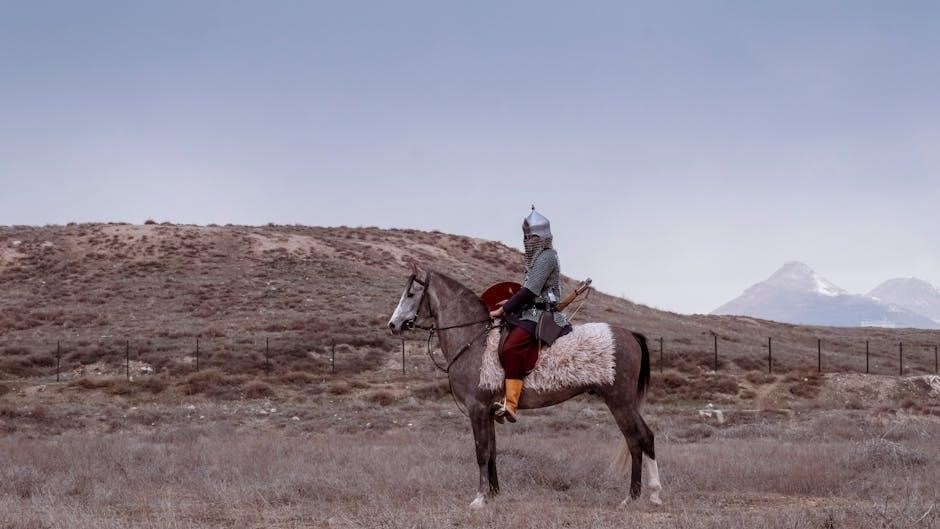
The availability of scholarly articles – ranging from fungal biosynthesis (IzquierdoBueno, 2018) to equine health (2024) – underscores the importance of diverse perspectives. Just as researchers analyze plant adaptations (Liu, 2025), understanding the nuanced integration of Islam into Malian society requires examining various sources and acknowledging its gradual influence.

Key Characters Beyond Sundiata
Beyond the central figure of Sundiata Keita, the epic features a rich cast of characters crucial to the narrative’s unfolding. Like the detailed data sets archived in repositories (Brown & Collins, 2023), each character contributes unique layers to the story’s complexity. Sogolon, Sundiata’s mother, embodies resilience and strength, while Dankaran Toumani, the jeli (griot), serves as the epic’s vital storyteller and historian.
The character of Soumaoro Kanté, Sundiata’s rival, represents a formidable opponent and a challenge to Mali’s nascent power. Analyzing these figures is akin to examining diverse species within an ecosystem (Liu, 2025), each playing a specific role. Access to research, like the studies on horse antibodies (2024) or protein content in rice (2024), allows for a comprehensive understanding.
The availability of scholarly PDFs (Salvatore & Adam, 2016; Das & Naskar, 2016) highlights the importance of detailed analysis. These characters, much like the components of a complex biochemical process (IzquierdoBueno, 2018), are essential for grasping the epic’s full significance and historical context.
Themes and Symbolism in the Epic
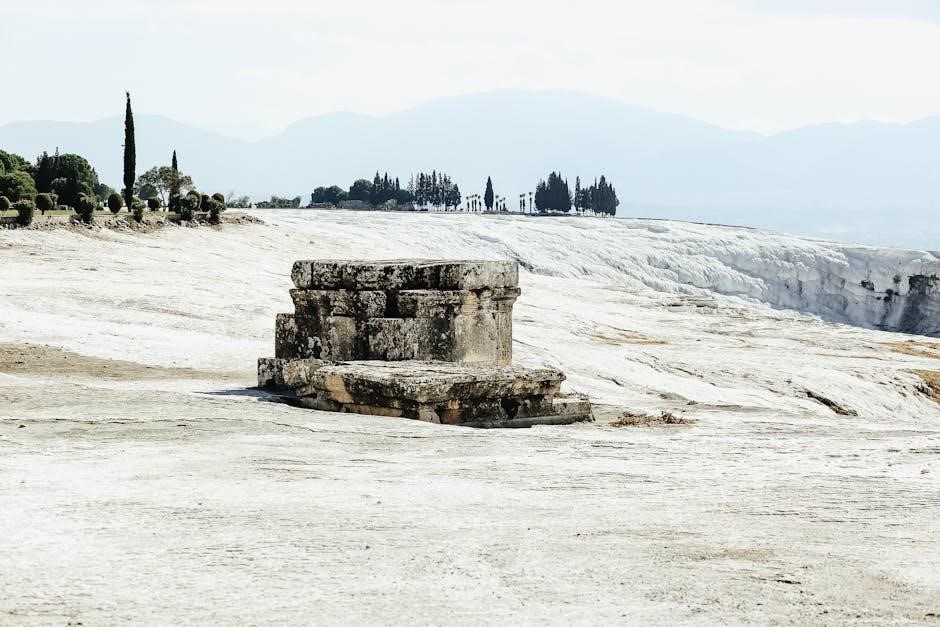
The Sundiata Epic resonates with profound themes of destiny, power, and the founding of a nation. Similar to the archived research data available as PDFs (Brown & Collins, 2023), the epic’s layers reveal deeper meanings upon closer examination. Central to these is the concept of overcoming adversity, mirroring the challenges faced in ecological management scenarios (2022).
Symbolism is rife throughout the narrative; Sundiata’s physical challenges represent the struggles of a nation finding its footing. The battle of Kirina, a pivotal moment, symbolizes the triumph of good over evil, akin to the fight against disease prevalence documented in veterinary studies (2024). Access to scholarly articles (Salvatore & Adam, 2016; Das & Naskar, 2016) aids in deciphering these symbolic representations.
Just as biochemical studies reveal intricate processes (IzquierdoBueno, 2018), the epic’s themes are interwoven with cultural and historical contexts. The readily available PDF resources allow for a nuanced understanding of these symbolic layers, enriching our appreciation of this foundational West African story.
Availability of ‘Sundiata Epic of Old Mali PDF’ Resources
Locating comprehensive PDF resources dedicated solely to the ‘Sundiata Epic of Old Mali’ proves surprisingly complex, mirroring the challenges in accessing specific data sets, as seen in archived research (Brown & Collins, 2023). However, numerous academic databases and online libraries offer related materials. Scholarly articles analyzing the epic, often available as PDFs (Salvatore & Adam, 2016; Das & Naskar, 2016), provide invaluable context.
While a single, definitive ‘Sundiata Epic PDF’ may be elusive, collections of African folklore and oral traditions frequently include translated versions or excerpts. Resources like the Environmental Data Initiative Repository (EDI) demonstrate the increasing accessibility of research, hinting at a potential future for wider epic availability. Similar to studies on plant species (Liu, 2025), focused searches are key.
Furthermore, university repositories and digital archives often contain theses and dissertations analyzing the epic, frequently accessible as downloadable PDFs. These resources, alongside journal articles (IzquierdoBueno, 2018), offer a rich tapestry of scholarly engagement with the text.
Modern Interpretations and Significance
Contemporary analyses of the Sundiata Epic, often disseminated through scholarly PDFs (like those archived in repositories – Brown & Collins, 2023), highlight its enduring relevance. The epic transcends a mere historical account, functioning as a foundational narrative for Malian identity and a potent symbol of resistance against oppression. Modern interpretations frequently explore themes of disability, leadership, and the forging of nations.
Similar to ecological studies utilizing extensive datasets (Liu, 2025), scholars dissect the epic’s layers, applying postcolonial theory and comparative mythology. The availability of research PDFs (Salvatore & Adam, 2016; Das & Naskar, 2016) facilitates this ongoing critical engagement. These analyses reveal the epic’s adaptability, resonating with contemporary concerns about governance and social justice;
Moreover, the epic’s emphasis on community and resilience finds parallels in modern management scenarios (revealed in predator control studies, 2022), demonstrating universal human experiences. Its continued study, fueled by accessible research materials, ensures its legacy endures, inspiring future generations.
Leave a Reply
You must be logged in to post a comment.